


Blog by Rachel Saunders of Key Assets Newfoundland and Labrador (Labrador Region)
Interim Program Manager – Out of Home Care & Program Supervisor- Independent Living Arrangement
Welcome to the Big Land, aka Labrador, which earned this nickname for its vast mountains, massive rock faces, and rivers and lakes that stretch for miles. Labrador is part of Canada’s easternmost province of Newfoundland and Labrador (NL). The Labrador region has a rich, diverse Indigenous culture, including Innu, Inuit, and Metis, which I will share more about below.
Key Assets has been operating Individualized Living Arrangements (ILA) and Emergency Placement Homes in serval communities of Labrador for many years, including Nain, Hopedale, and Happy Valley-Goose Bay. In this blog, I will share about these communities and the story of one of our staff members.
Nain, Labrador
The Innu in Labrador live in Natuashish (North Coast) and Sheshatshiu (Central) and are known as the Mushuau Innu or the Sheshatshiu Innu in Sheshatshiu. Both groups stem from one culture known as Caribou Hunters. The Innu in both communities speak Innu-aimun but have slightly different dialects. The Innu were traditionally nomadic, travelling the interior of Labrador and Quebec in the winter to hunt mostly for caribou and migrating back to the coast in the summer to fish. In Innu-aimun, the word, Tshinashkumitin is used to say, “thank you” and “you’re welcome”.
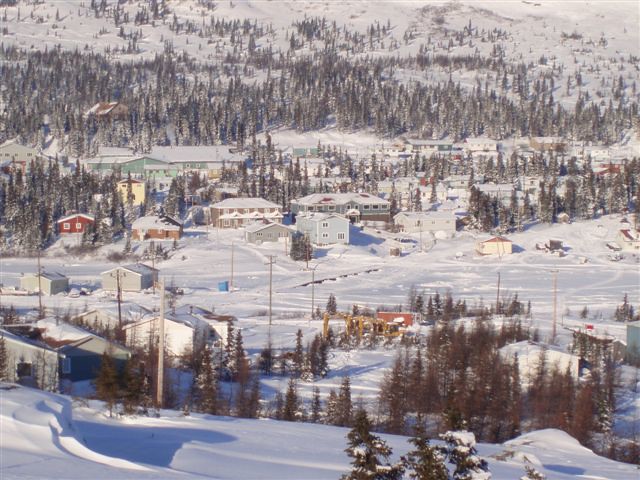
Hopedale, Labrador
The Inuit reside in five communities on the north coast of Labrador, which is where the modern-day Inuit now live. The communities include Nain, Hopedale, Postville, Makkovik and Rigolet. The ancestors of today’s Inuit were known as Thule Inuit, who expanded east towards the Canadian Arctic from Alaska around 1000 CE and still reside in Northern Labrador. The Inuit were also nomadic, and there were many small settlements on the north coast. They travelled to the interior to hunt caribou and then back to the sea to hunt seals and whales. Inuktitut is the language of the Inuit. In Inuktitut, Nakummek means “thank you”, and Ilali means “you’re welcome”.
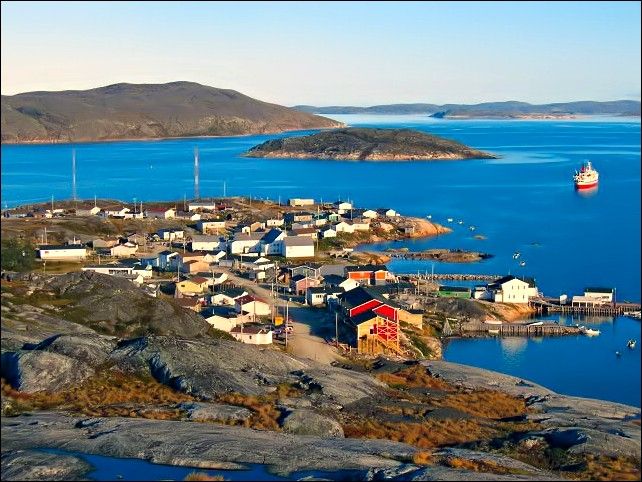
Happy Valley-Goose Bay, Labrador
The Metis are primarily the descendants of European men and Inuit women, but the Metis of Labrador are Indigenous people who also honour ancestors of Inuit, Innu, French, Scottish, Irish, and English origins. Metis people primarily live on the Central and Southern Coast of Labrador.

Caring For our Indigenous Youth
For hundreds of years, the Innu, Inuit and Metis lived off the land. They hunted animals like caribou, partridge, seal, fished for Arctic char, salmon, cod, and gathered berries such as redberry, blueberry, bakeapple. Today, the young people Key Assets supports in Labrador access traditional programming on the land and follow the traditions, culture, and values with Innu, Inuit, and Metis staff.
Throughout the Covid-19 pandemic, the staff in Labrador exemplified commitment and dedication to the young people in our care. They pivoted their programs and services to ensure proper care for our young people’s physical and emotional wellbeing.
One example is David, a child and youth care worker in Nain. A young person in his care developed symptoms of Covid-19, and he decided to remain with the young person while limiting his exposure to others to ensure the young person was safe and cared for. There were multiple outbreaks in many areas of Newfoundland and Labrador during this time, and PCR test results were delayed. Given such, David chose to remain with the young person for almost two weeks while missing his young family. David’s dedication to caring for young people is evident, and his actions during this time also highlighted his care and concern for our children and youth and his co-workers as well.
To learn more about Key Assets Canada, visit: https://www.keyassets.ca